
UNDERSTANDING RAKERS AND WALERS IN EXCAVATION SHORING
A practical overview of two key members in braced excavations—and the coordination needed when their steel connections are fabricated or welded in the field.
Deep excavations often require temporary structural support as construction progresses. Depending on the engineered system, diagonal rakers and horizontal walers are among the members used to help transfer earth-retaining loads through the bracing arrangement. Their exact geometry, loading and connections depend on the project design.
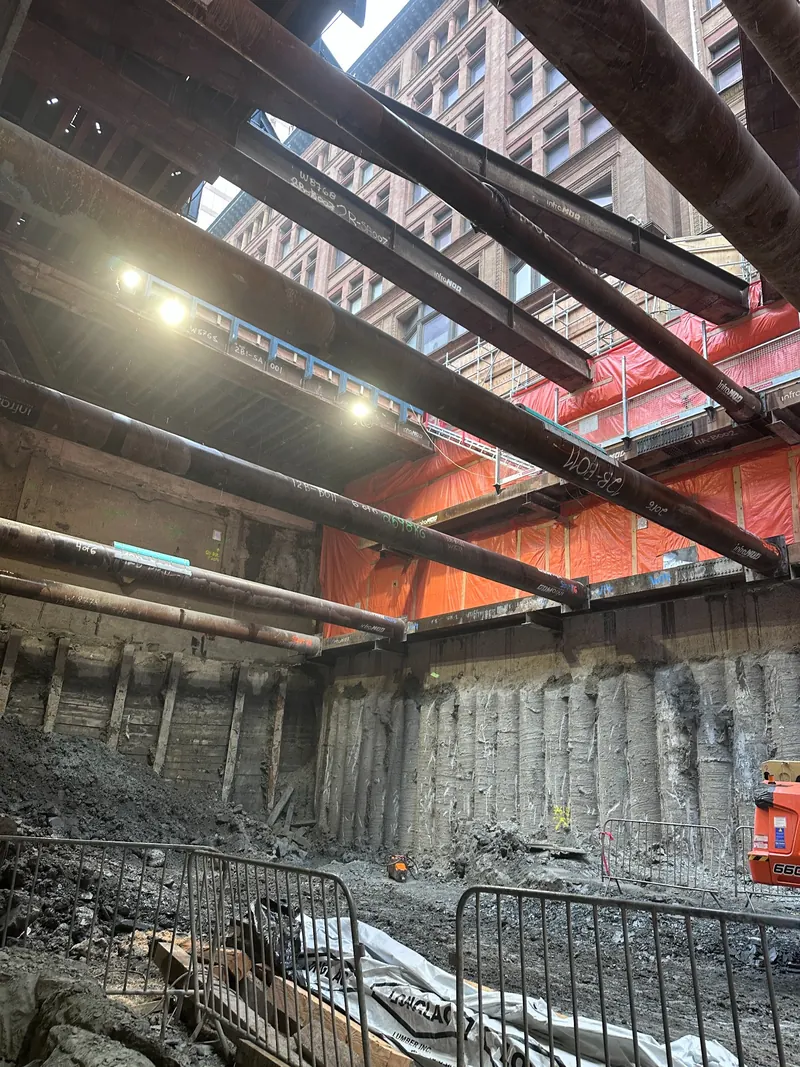
What is a raker?
A raker is an inclined compression member commonly used to brace an excavation-support wall toward an internal support point. Rakers are often prominent on constrained urban sites where temporary access, excavation depth and construction sequence all influence how the bracing is installed.
For welding crews, the important distinction is that a raker is part of a designed load path. Welded plates, lugs or connection components must therefore follow the approved connection details—not a generic arrangement copied from another project.
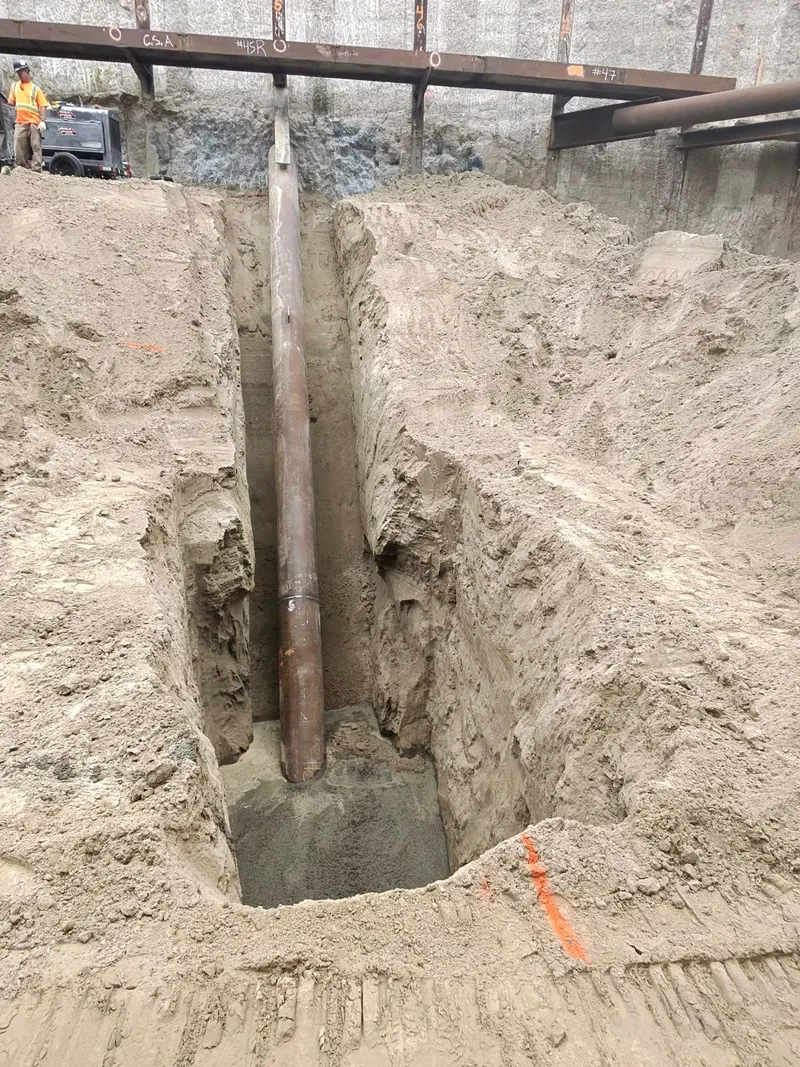
What is a waler?
A waler is typically a horizontal member positioned along a retaining or shoring wall to collect and distribute forces between support points. In a particular system, walers may interact with rakers, struts, tiebacks or other engineered components.
The term describes the member's structural role, not a standard connection detail: sizes, brackets, splice locations and temporary conditions must be determined by the project drawings.
Where field welding fits
Common welding-related tasks can include preparing connection plates, attaching brackets or support chairs, completing engineered splices, and fitting components at locations specified by the approved drawings. Access and fit-up often differ between shop fabrication and active excavation sites.
Welders may need to coordinate with excavators, piling crews, riggers and the site supervisor so connections can be safely reached and inspected before loads are transferred or the next construction stage proceeds.
Why construction sequencing matters
A connection that is accessible today may become concealed by formwork, shotcrete or additional bracing tomorrow. Coordinating the order of installation, welding and inspection can help reduce rework while maintaining the design requirements for temporary works.
Technical note: This article explains field terminology and coordination; it is not a design, welding procedure, or installation instruction. Shoring configurations and connection acceptance must follow the project engineer's approved documents and applicable inspection requirements.
Field examples and related services
See our raker and waler field photo notes for examples of connection-related steelwork. For project enquiries, visit Riconstruct's shoring and pile welding services or H-pile splicing.
Coordinating a shoring welding scope?
When requesting a quote, provide approved connection details, required welding scope, anticipated schedule, site access information and any inspection requirements.
Discuss a project →