
H-Pile Splicing: Field Welding Considerations for Shoring Contractors
H-pile splicing on shoring sites: approved details, access, fit-up, sequencing and field welding coordination for Toronto and GTA contractors.
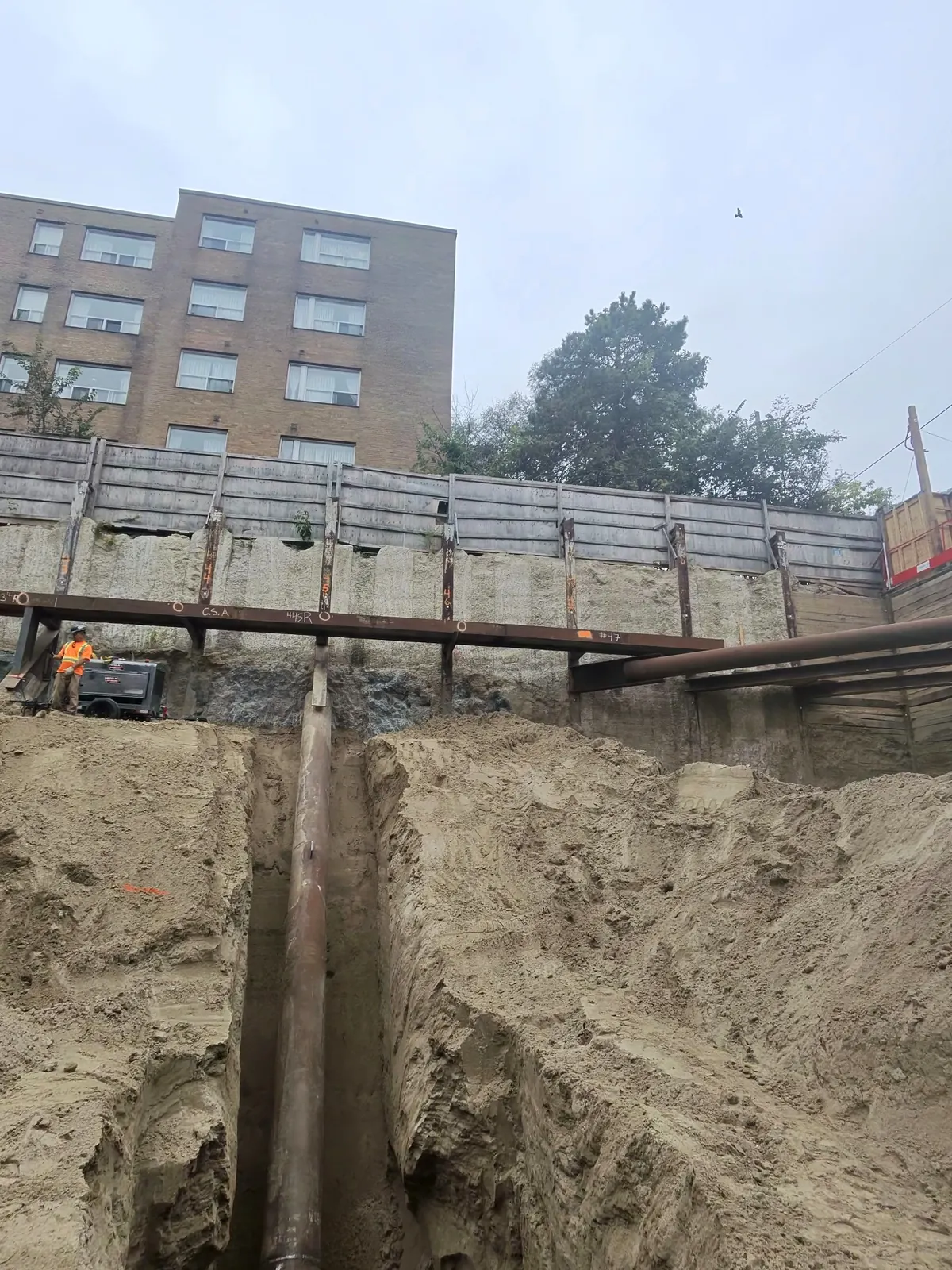
Field knowledge for construction professionals. Connection design, fabrication, welding and acceptance must follow project-specific approved drawings, procedures and inspection requirements.
Why splices are part of shoring work
Steel H-piles may need to be joined in the field when transportation lengths, installation sequencing or design requirements prevent placement as one continuous member. The splice location and connection details are determined by the project design, not selected by the welding crew for convenience. For a welding subcontractor, understanding the intended load path and installation sequence starts with receiving the approved drawings.
Information to confirm before mobilizing
A contractor should identify the pile section and grade, the approved splice detail, access around the joint, expected position of the work, welding process requirements and hold points for inspection. Confirm whether the piles will be supported during fit-up and who is responsible for alignment and temporary restraint. If any part of the detail does not match the steel encountered on site, seek clarification before altering the connection.
Field fit-up and site access
In a busy excavation, access can be restricted by equipment, adjacent piles, lagging and temporary works. Fit-up affects how the specified joint can be completed and inspected. The project team should plan for safe access to all required weld locations, including any backing, plates or attachments shown in the approved detail. Weather exposure and handling arrangements are also scheduling considerations.
Welding, inspection and handover
The applicable procedure, welder qualifications and inspection requirements depend on the project specifications and governing rules. Welders should not infer a procedure from a photograph of another job. Record the completed scope and any required inspection or repair documentation under the contractor’s quality process before the splice is relied upon for subsequent work.
A practical quotation checklist
Provide the pile count, cross-section, drawing revision, splice location, joint detail, anticipated site dates, equipment access, welding process requirements and inspection responsibilities. Clear information reduces assumptions, supports accurate pricing and allows the field crew to plan mobilization around the shoring contractor’s sequence.
Planning a shoring welding scope?
Share approved connection drawings, quantities, access information and your schedule so the scope can be reviewed.
Explore related welding services →